Professional Timeline
What I’ve done since graduating from college.
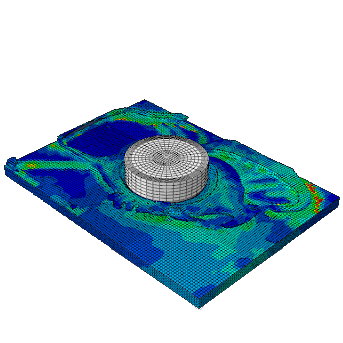
Metallurgical simulation at Materialprüfungsanstalt Stuttgart
My role at MPA Stuttgart was my first direct experience with numerical simulation. Here, I helped to develop and fine-tune a strain hardening model for multiphysics finite element simulation of friction stir welding.
Failure analysis at Apple Inc.
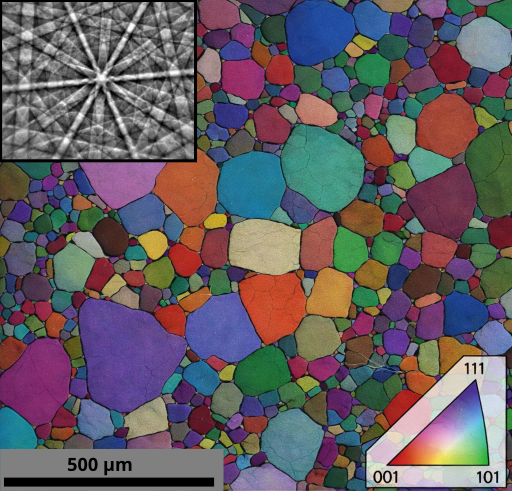
In Apple’s product design materials group, I worked on a wide variety of issues involving fundamental materials science affecting all Apple products. Among other responsibilities, the PD Materials group develops innately colored metalloceramic coatings for cosmetic surfaces of Apple products. It was here where I was introduced to microanalysis techniques - personally making heavy use of focused ion beam (FIB) and scanning electron microscopy (SEM) - and often hiring external CROs to perform transmission electron microscopy (TEM) and electron energy loss spectroscopy (EELS). I became interested in microscopy and scientific imaging, and decided to pursue a PhD to learn more.
PhD in Materials Science & Engineering at UT Austin
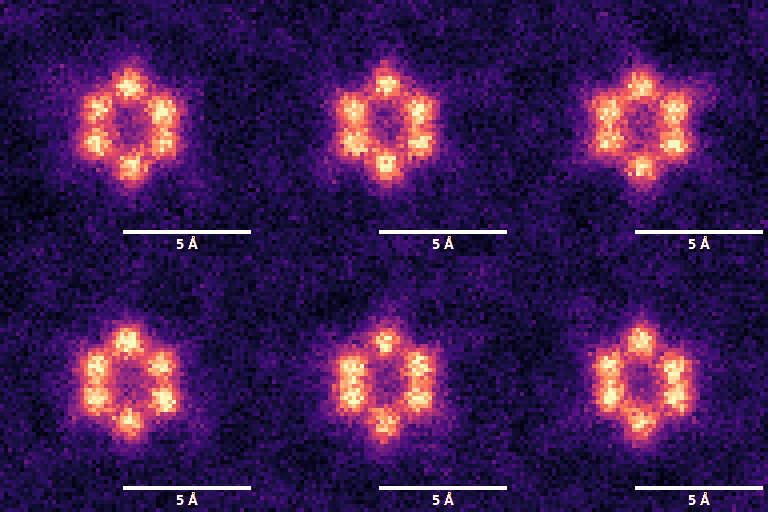
I began studying under Professor Jamie H. Warner at the University of Texas at Austin. Jamie had just moved to UT from Oxford, where he’d worked for more than 10 years. Kevin Matthews and I were his first two students in the US. Together, we played a big part in getting the new lab up and running. I defended my thesis and earned my PhD in 2025.
Research and Career Interests
My pre-PhD background pushed me to develop and apply computational methods for transmission electron microscopes; however, my career and research interests are by no means limited to microscopes. To learn more, please refer to my blog post on why I chose to get a PhD and how I wish to use it.